
Osaka Travel Guide: Three Days in Japan's Kitchen, From a Travel Advisor Who Just Went
By Kelly Chang, TripMatters, a VIRTUOSO travel agency in Tustin, California
My husband and I spent three days eating and shopping our way through Osaka in June 2026. Here is everything I would tell you before you go, including the train trick that saves you real stress on arrival.
Osaka is often called Japan's kitchen, and after three days there I understand why. This is a city that pours itself into food, from street-side takoyaki to a sushi omakase I am still thinking about. We were there from in June 2026, flying in from Seoul, and we split our stay between two very different hotels, the Waldorf Astoria Osaka and the Conrad Osaka, which I will review separately.

Getting from Kansai Airport into the City Without the Stress
Here is my single most useful tip. Buy your train ticket into Osaka Station ahead of time on Klook. Kansai International Airport has a lot of train options, and it is genuinely confusing to sort out in the moment after a flight. Booking in advance takes that decision off your plate.
We took the Haruka Limited Express, which since 2023 now runs directly into Osaka Station on the underground Umekita platforms. Buy the non-reserved ticket. The Haruka runs about every 30 minutes, and with a non-reserved ticket you can hop on whichever one is leaving without stressing about catching an exact train. The non-reserved cars are usually cars 4 through 6, so just walk to that section of the platform. If you miss one, another is not far behind.

Once you are in the city, Osaka is easy to get around on the subway. Grab an IC card, either ICOCA, which is the local Osaka card, or a Suica, which works interchangeably across Japan. You tap in and out and never think about individual fares again.

Dotonbori, and the Giant Food Above the Storefronts
Dotonbori is the neon heart of Osaka, and it is where we did our first real wander. You walk along the canal, cross the Ebisubashi bridge, and eat your way through the street food stalls. It is loud, bright, and exactly the sensory overload you want on a first night.

One thing you will notice immediately is the enormous, almost cartoonish food and figures mounted above the storefronts. There is a whole culture behind them. The Glico Running Man has glowed over the canal since 1935, and the current LED version went up in 2014. The Kani Doraku crab is a six and a half meter mechanical crab that actually moves its arms and eyestalks. The Kuidaore Taro, a drum-playing clown, has stood here since 1950. They all tie back to an old Osaka philosophy called kuidaore, which roughly means to eat yourself into ruin. While other cities saved face or prized restraint, Osaka put its money into the next great meal. It shows.

Dotonbori is also pharmacy central, and this is where I want to save your parents some money. Japanese vitamins and pharmacy items are much cheaper in Osaka than back home, and our parents love them. If Osaka is on your Japan itinerary, buy your pharmacy and vitamin haul here rather than in a pricier city. We also found an incredible udon shop in the area, with noodles so chewy you could tell they were handmade.

Matcha, Honestly
I am a picky matcha drinker. I love it, so I hold it to a high standard, and I want to be honest with you about Japan. A lot of the matcha lattes I tried were not as good as I expected. My theory is that matcha lattes simply are not as popular among locals, who tend to drink the tea straight, so the latte culture we have in the States is not really the point here.
The exception, and my strong recommendation, is Matcha Dor 587 Kohana. Their matcha ice cream was outstanding, very creamy and very matcha-forward, and it cleared my picky bar easily. If you love matcha, go for the ice cream over the latte.

A Convenience Store Trick Worth Trying
Here is a fun one. At the convenience store, grab a vitamin C drink, a fiber drink, a cup of ice, and a fiber jelly. Locals enjoy these separately, but we saw a TikTok trend suggesting you mix them into one drink, and it is said to help with digestion. After a few days of heavy eating in Japan's kitchen, it was a welcome little ritual.

Nipponbashi Surprised Us
On our second day, after breakfast at the Waldorf, we headed to Nipponbashi, also known as Den Den Town, Osaka's electronics, anime, and hobby district, often compared to Tokyo's Akihabara. We were genuinely surprised by how much food and shopping there was packed into the area.
We also stopped at a shop selling incredibly realistic food-art magnets and picked up a katsu one. Osaka and the nearby kitchenware street are famous for this craft of hyper-realistic food replicas, and up close you truly cannot tell they are fake. It is a fun, very Osaka souvenir.

Omakase at Kokuryu
The meal of the trip was omakase at Kokuryu. We had a set that moved through sushi, A5 wagyu, hand rolls, and warabi mochi to finish. One of our chefs had worked as a sushi chef in Canada, so he spoke perfect English, and he told us he had come back to his hometown to raise his family and keep pursuing sushi. That story, told over the counter as he worked, is the kind of moment that makes a meal unforgettable. I will absolutely be back.

Osaka Is a Vintage Designer Shopping Paradise
If you love secondhand and vintage designer shopping, Osaka is one of the best cities in the world for it. There are clusters of shops right near each other, all worth going into, and you can spend a whole afternoon hopping between them. The curation is excellent and the hunt is half the fun. This alone is a reason some of my clients would love Osaka.
The Big Sights, Markets, and the Longest Arcade in Japan
Beyond the food and shopping, Osaka has the landmarks to round out a trip. Osaka Castle is the headline attraction and worth the visit. Kuromon Ichiba Market, sometimes called Osaka's kitchen within Japan's kitchen, is a covered market packed with fresh seafood, produce, and stalls to graze through.
For shopping with stamina, Tenjinbashisuji is the longest covered shopping arcade in Japan at 2.6 kilometers, with around 800 shops running through the old merchant district. Right nearby is Tenma, which has a huge, lively nightlife scene where a lot of locals go to drink beer. It is a great way to see how Osakans actually unwind.
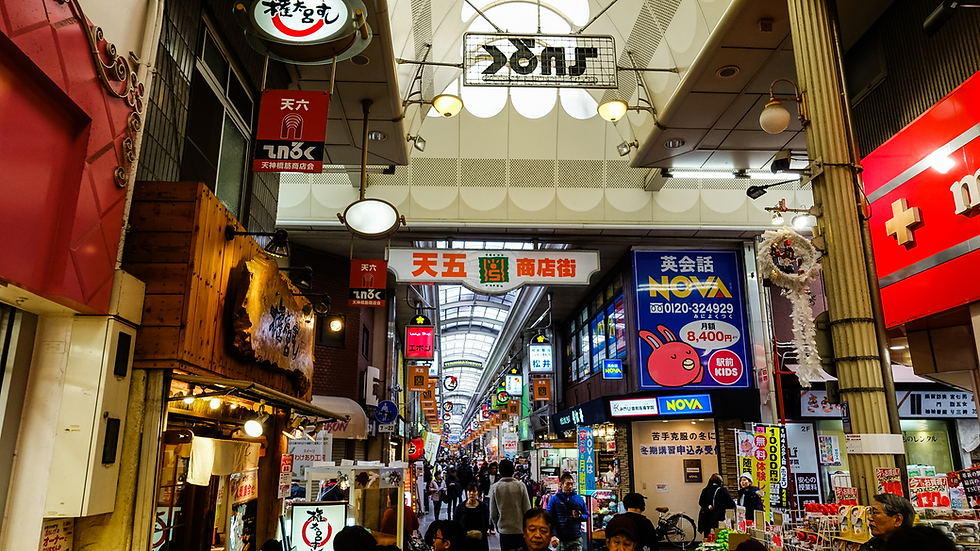
Getting Around, the Weather, and a Rain Tip

Osaka is genuinely easy to navigate by subway with your IC card, which made our days smooth. The weather in June was good overall. It rained here and there, but nothing that derailed a day. If you do get caught out and need an umbrella, skip the convenience store version and go to Uniqlo. Their compact umbrellas are great quality, cheap, and small enough to toss in a bag.

Where We Stayed
We split our two nights between two hotels with completely different personalities. The first was the Waldorf Astoria Osaka in the new Umekita district, where timeless New York glamour meets Japanese elegance. The second was the Conrad Osaka, which is sleek, modern, contemporary, and very art-forward. The team there kindly treated us to their teppanyaki restaurant over a few drinks. I am writing full reviews of both hotels separately, so I will save the detail for those.

Planning Osaka Into Your Japan Trip
Osaka rewards travelers who love food, shopping, and a city with real personality. If you are planning a Japan trip and want Osaka done right, from the airport transfer to the neighborhoods worth your afternoons to the hotels that match your style, that is exactly what I do. At TripMatters, a VIRTUOSO travel agency in Tustin, California, we build custom Japan itineraries all the time. If you are in Orange County, stop by our Tustin office or schedule a free consultation, and keep an eye out for my Waldorf Astoria Osaka and Conrad Osaka reviews coming next.
Frequently Asked Questions - Osaka Travel Guide
How do you get from Kansai Airport to Osaka? The easiest way is the Haruka Limited Express, which now runs directly into Osaka Station. Buy a ticket in advance on Klook to avoid confusion at the airport, and choose non-reserved, so you can board any Haruka rather than a fixed departure. Trains run about every 30 minutes, and the non-reserved cars are usually cars 4 through 6.
Do I need a Suica or ICOCA card in Osaka? Yes, an IC card makes getting around much simpler. ICOCA is Osaka's local card and Suica is Tokyo's, but they work interchangeably across Japan, so either one lets you tap on and off the subway and trains without buying individual tickets.
What is Osaka known for? Food, above all. Osaka is nicknamed Japan's kitchen, famous for takoyaki, okonomiyaki, udon, and street food in areas like Dotonbori. It is also known for the giant signboards over Dotonbori, excellent vintage designer shopping, and cheaper Japanese pharmacy and vitamin products.
Where should I buy Japanese vitamins and pharmacy items? Osaka, and specifically the Dotonbori area, is a great place to stock up. Japanese vitamins and pharmacy goods tend to be noticeably cheaper here than in other Japanese cities or back home, so if Osaka is on your itinerary, buy them there.
Is Osaka good for shopping? Very. Osaka is one of the best cities in Japan for vintage and secondhand designer shopping, with clusters of stores worth browsing. For sheer scale, Tenjinbashisuji is Japan's longest covered shopping arcade at 2.6 kilometers with around 800 shops.
How many days do you need in Osaka? Two to three days covers the highlights, which is what we did. That is enough for Dotonbori, Osaka Castle, Kuromon Market, a great meal or two, and some shopping, while leaving Kyoto and other day trips for separate days.


Comments